
Australia’s Credit Card Gambling Ban and What It Means for Skrill Users
 Available in US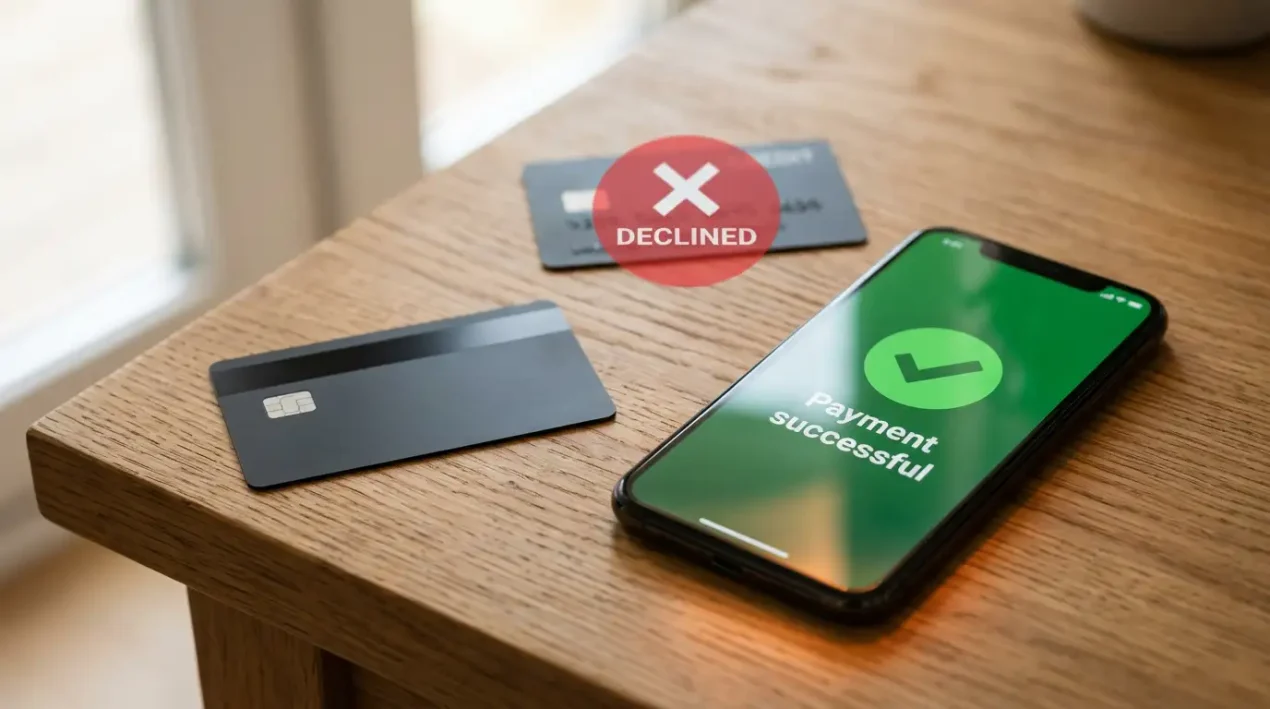
On 11 June 2024, Australia drew a hard line: no more credit cards for online gambling deposits. The penalties for operators that breach the ban reach up to AUD 247,500, and the enforcement mechanism works at the payment processing level — meaning transactions are blocked before they reach the bookmaker’s system, not flagged after the fact. I remember the weeks leading up to the ban, when operators scrambled to reconfigure their payment gateways and punters flooded forums asking what would happen to their deposit routines. After eleven years working in wagering payment infrastructure, I was not surprised by the regulation itself — the surprise was that it took this long. The wider context sits in our guide to Skrill betting in Australia.
What the June 2024 Ban Covers and the Penalties Involved
Amanda Rishworth, Australia’s Minister for Social Services, stated that the government takes seriously its responsibility to prevent and reduce harm from online wagering, and the credit card ban is one of the instruments delivering on that commitment. The regulation applies specifically to credit card transactions used for deposits at online wagering services licensed under Australian state and territory regimes. Debit cards, bank transfers, and e-wallets funded by debit sources remain fully legal.
The scope of the ban is broader than many punters initially realised. It covers not only direct credit card deposits at bookmakers but also indirect routes — such as using a credit card to fund an e-wallet and then depositing from the e-wallet to a bookmaker. If Skrill detects that a credit card is being used to fund a wallet balance that flows to a gambling operator, that transaction path is blocked. The intent is clear: the ban targets the source of funds, not just the payment method at the point of deposit.
For operators, the penalties are structured to ensure compliance is not optional. The AUD 247,500 maximum fine per infringement, combined with the reputational risk of being publicly cited for a breach, creates a strong deterrent. ACMA enforces the provision, and their investigation record — 301 complaints examined in Q4 2024 alone — shows the regulator is actively monitoring the market.
How the Ban Reshaped Skrill’s Role for Australian Punters
The general gambling participation rate in Australia dipped slightly to 58.8% in 2025, but risky gambling climbed from 13.7% in 2024 to 19.4% in 2025 — a concerning trajectory that partly motivated the credit card intervention. The ban’s impact on Skrill usage is a story of substitution: punters who previously relied on credit cards needed an alternative, and e-wallets funded by debit sources filled that gap.
Before the ban, a segment of Skrill users funded their wallets with credit cards specifically for gambling deposits. That route is now closed. What remains is Skrill funded by debit cards, bank transfers, or Paysafecard vouchers — all of which represent money the punter already has rather than borrowed funds. This is precisely the behavioural shift the regulation intended.
For punters who always funded Skrill with debit sources, the ban changed nothing in practical terms. Their deposit flow was already compliant. For those who relied on credit card funding, the adjustment required opening a new funding pathway into Skrill. The most common transition I have observed is a shift from credit card to debit card as the primary Skrill funding method — a change that takes five minutes to configure in the Skrill app but fundamentally alters the financial risk profile of the bettor’s activity.
The ban also elevated Skrill’s privacy advantage. With credit cards removed from the equation, punters who want to keep betting activity off their primary bank statements find Skrill even more valuable as an intermediary. The debit card funding transaction shows as a transfer to Skrill, not a gambling deposit, and the subsequent deposit from Skrill to the bookmaker is contained within the e-wallet ecosystem.
Funding Skrill Without a Credit Card: What Options Remain
The available funding methods for Skrill in Australia post-ban are straightforward, and none of them involve borrowed money — which is the point of the regulation.
Debit card funding is the most seamless transition for former credit card users. You link your Australian debit card to your Skrill account and use it to top up your wallet. The process is identical to credit card funding from the user’s perspective — enter the card details, specify the amount, confirm — but the funds come from your bank balance rather than a credit line. Most Australian bank-issued Visa and Mastercard debit cards work without issue. The card that still works is the Skrill Prepaid Mastercard.
Bank transfers allow you to send funds from your Australian bank account directly to your Skrill wallet via a standard electronic transfer. Processing times vary — same-day for some banks, one to two business days for others — but the method is free of intermediary fees and moves money from your settled balance. Pre-funding your wallet via bank transfer the day before you plan to bet is the approach I recommend for punters who want to avoid any deposit-day delays.
Paysafecard vouchers provide a cash-based entry point. You purchase a physical voucher at participating retailers — convenience stores, newsagents, and similar outlets — and use the voucher code to load funds into your Skrill wallet. The voucher is prepaid, so the money comes from cash you have already spent. This method carries a loading fee that other funding methods do not, but it serves punters who prefer cash-based transactions or want to keep their betting fund entirely separate from their bank accounts.
Industry Reaction and Offshore Consequences
The credit card ban received broad industry support from licensed operators, but the offshore consequences introduce a complication that the regulation has not fully addressed. Australia’s illegal offshore gambling market is estimated at USD 2.5 billion annually, with 36% of all online gambling in 2025 flowing through offshore sites.
Offshore operators are not subject to Australian law and continue to accept credit card deposits from Australian punters. This creates a perverse incentive: the punter whose credit card betting is blocked at a licensed domestic bookmaker can still use that same credit card at an unregulated offshore site. The restriction applies only to operators within the regulatory perimeter, not to the punter’s behaviour outside it.
For Skrill users specifically, this has a practical implication. Skrill blocks credit card funding for transactions directed at licensed gambling operators, but the enforcement depends on Skrill’s ability to identify the destination as a gambling service. At licensed Australian operators, this identification is reliable. At obscure offshore platforms, the transaction coding may not trigger the same block. I am not suggesting anyone pursue this route — the legal and financial risks of offshore gambling are substantial. But acknowledging the enforcement asymmetry helps explain why the broader responsible gambling framework remains critical even after the credit card ban.
The net effect of the ban on the payment landscape is a market that has shifted decisively toward debit-funded transactions. Skrill sits comfortably in that post-ban world, provided users understand that the wallet itself must be funded from compliant sources. The credit card ban did not diminish Skrill’s utility — it reinforced its position as a debit-funded intermediary that adds speed, privacy, and convenience to a payment flow that now starts with money the punter already owns.
Can I still fund my Skrill account with a credit card for non-betting purchases?
Yes. The credit card gambling ban applies specifically to transactions directed at online wagering services. Funding your Skrill wallet with a credit card for other purposes — online shopping, peer-to-peer transfers, or non-gambling payments — remains legal. However, if the credit card-funded balance is then used for a gambling deposit at a licensed Australian operator, the transaction will be blocked.
Did the credit card ban increase Skrill usage at Australian bookmakers?
The ban created a substitution effect where punters who previously deposited directly with credit cards shifted to alternative methods including debit-funded e-wallets like Skrill. For punters who already used Skrill with debit funding, nothing changed. The overall trend has been an increase in debit card and e-wallet deposits at the expense of credit card transactions, consistent with the regulation’s intent.
